The yoghurt was meant for breakfast. Then the week changed, the milk moved in front of it and breakfast became toast on the way out. The yoghurt is still there; the plan for it has disappeared.
This is where a food reminder can help. It brings something back to your attention while you’re deciding what to eat, giving you another chance to fit it into the day.
QR Pantry includes free push reminders for saved food dates, with email reminders available in Pro. Their usefulness starts with the food you want to remember and the information you save about it.
The reminders worth hearing from
An alert for every staple can soon become background noise. The better candidates are often the foods that slip between meals: a sauce opened for one recipe, an ingredient bought with good intentions, or that yoghurt behind the milk.
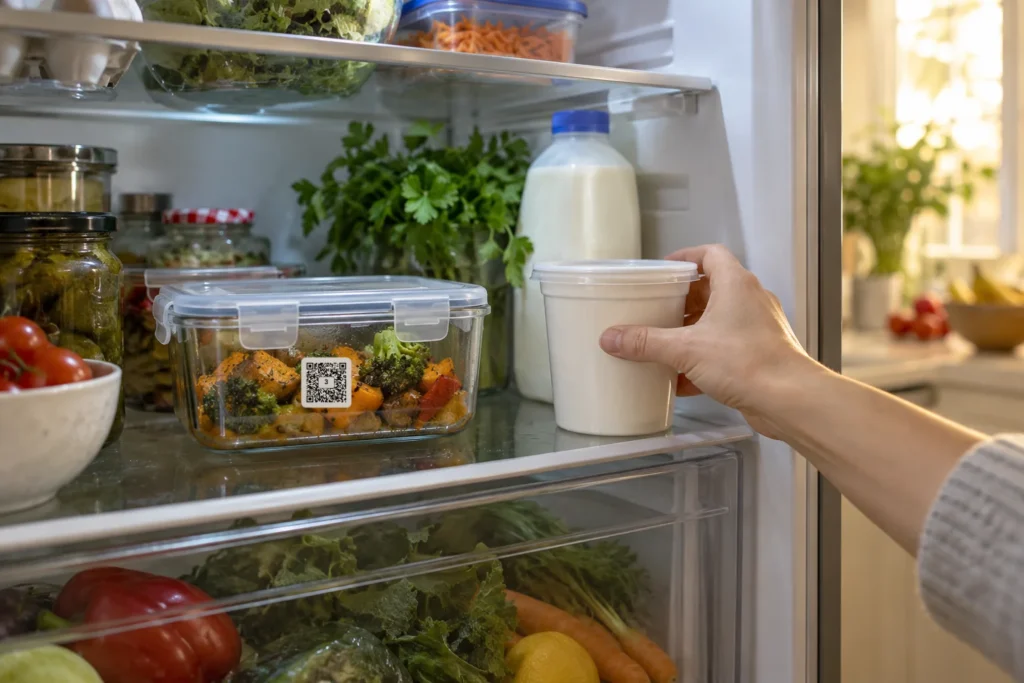
You can enable reminders for individual items as you save or edit them. A clear name and location mean the eventual alert points to something you can find. ‘Opened tomato sauce, fridge’ is a much better invitation to think about dinner than an unfamiliar product code.
The phone needs permission to deliver notifications too. That permission belongs to the device, so signing in on a second phone doesn’t automatically enable its alerts. The setup guide covers the device-specific steps. If you usually plan from your inbox, Pro’s email option may suit you better; it can be switched off when push is enough.
The date behind the nudge
A reminder follows the date you save. For packaged food, that begins with the printed date and the matching Use by or Best before choice in QR Pantry. FSANZ explains that use-by concerns safety and best-before concerns quality. Storage directions still apply, and food shouldn’t be eaten after its use-by date.
Opening a packet may introduce an earlier deadline. If its directions say to use the contents within three days of opening, the opening day matters as well as the original date. The reminder should reflect whichever applicable deadline comes first, with the original printed information kept in Notes or a readable pack photo.
Homemade food has a different starting point: when it was cooked and how it was stored. Appropriate leftovers guidance helps with that decision. An app’s suggested date needs reviewing because the app can’t establish what happened to the food before it was recorded.
These details are worth getting right while the packet or container is in your hand. Later, when the reminder arrives between other things, you have enough context to make a useful decision.
When the reminder arrives
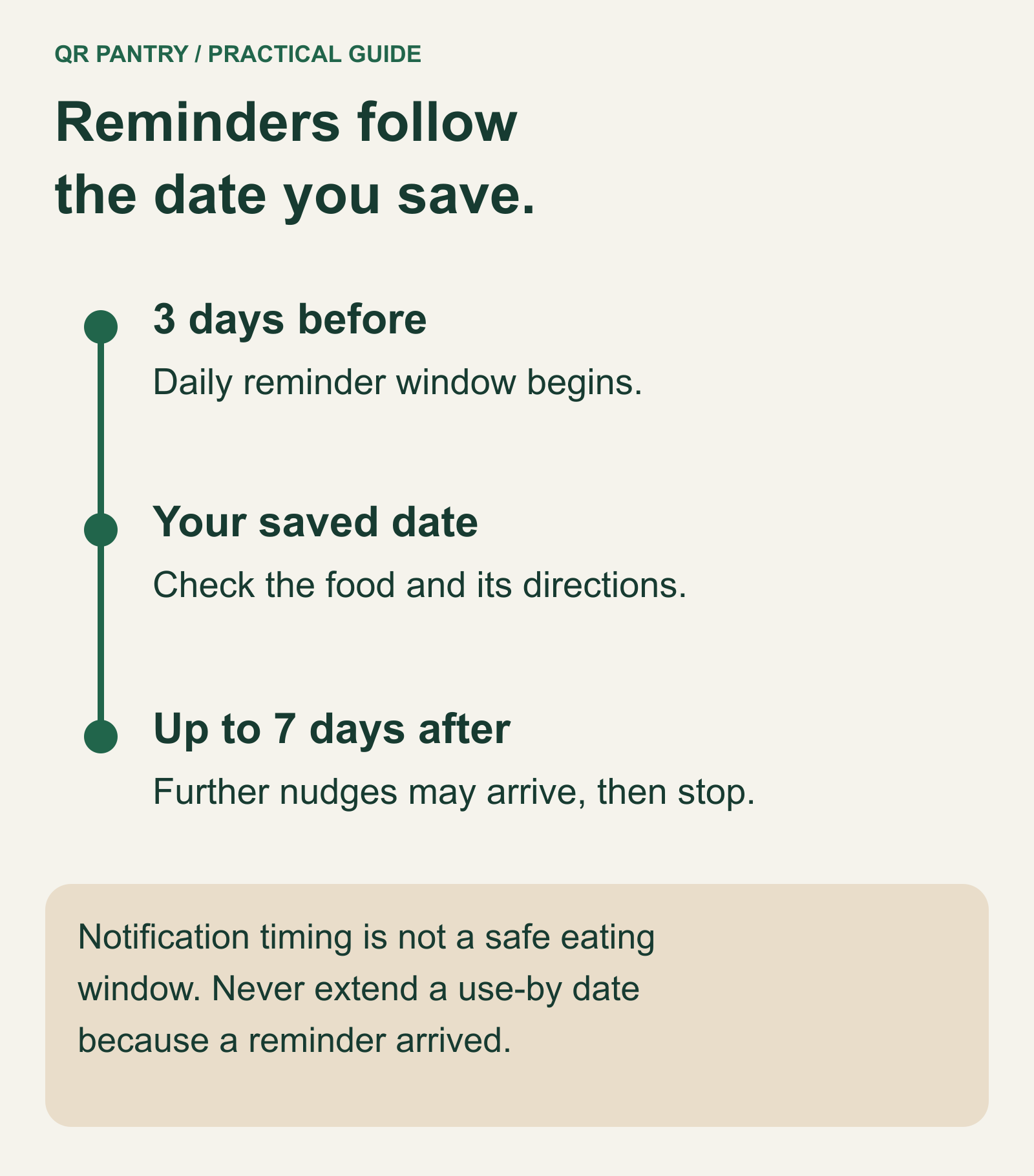
QR Pantry checks for due reminders daily. Its current notification window begins three days before the saved date and may continue for up to seven days afterwards. Several due foods can appear together in a summary, bringing a few possibilities back into view at once.
The days after the date are part of the notification schedule, not extra time in which food is safe to eat. An alert after a use-by date might simply reveal a record that should have been closed when the food was eaten. Reminders eventually stop, but the food record and its date remain.
If an expected alert doesn’t arrive, the useful checks are whether reminders are enabled for that item, whether its saved date falls within the window, and whether the phone allows notifications. Focus modes and other device settings can affect what you see.
Back into the day’s plans
The next decision can be small. If the yoghurt is suitable to use, tomorrow’s breakfast has an answer. An opened sauce might fit a dinner you already intended to make. Our meal-planning article looks at how those ingredients can shape the week.
Sometimes the food has already been eaten. Marking it Used up clears up that mismatch; discarded food can be recorded as wasted. Extending a use-by date just to quiet the alert would leave the wrong information behind.
The useful outcome is what happens after the notification: a breakfast remembered, a meal decided or an old record put right. The yoghurt is back in the picture, while there’s still a reason to reach past the milk.