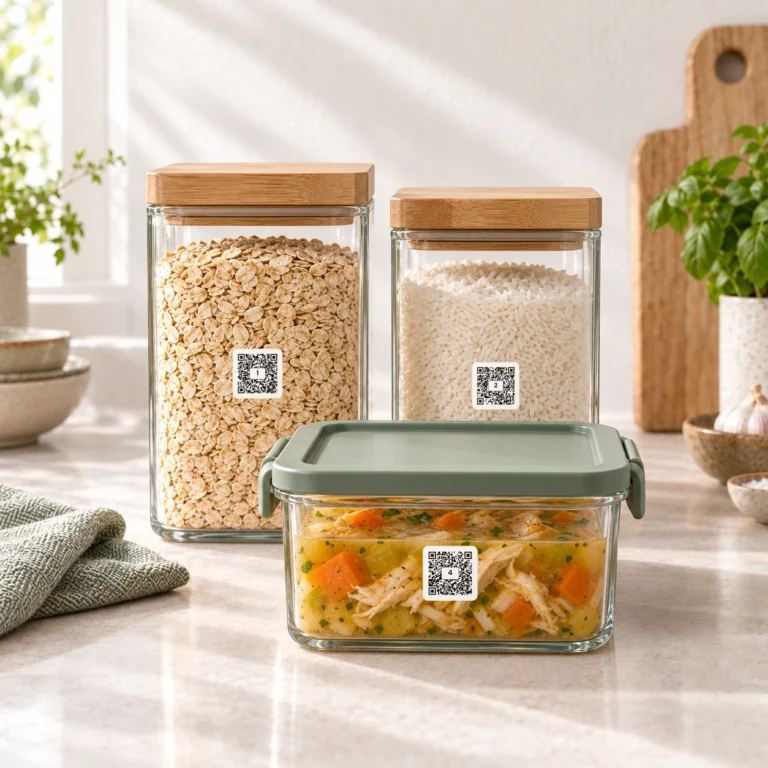
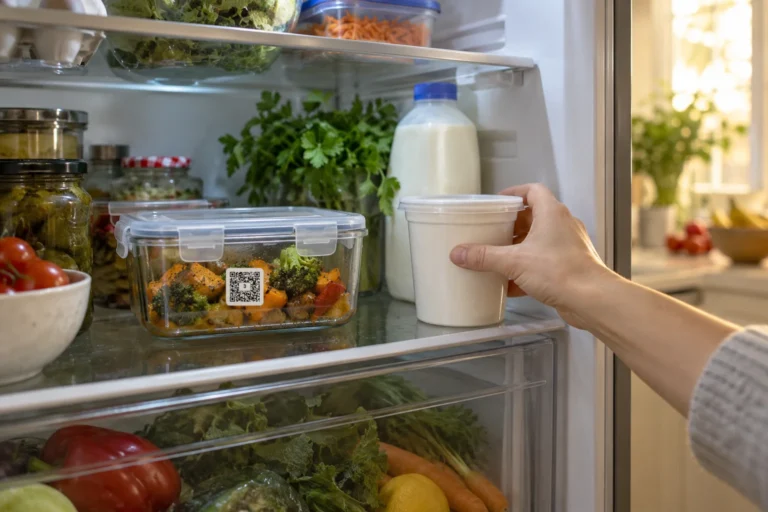
Two people stop at the shops on the way home. Both remember that the yoghurt was running low, so both buy another pack. At home, there’s already an unopened one behind the cheese.
Everyone was trying to help. They were working from different versions of what the kitchen needed: the person who finished a pack, the person who bought its replacement and the person who hadn’t seen either happen.
A shared kitchen produces these small gaps all the time. QR Pantry’s household sharing gives the information somewhere to live, so buying dinner doesn’t depend on reaching the right person at the right moment.
One kitchen, one starting point
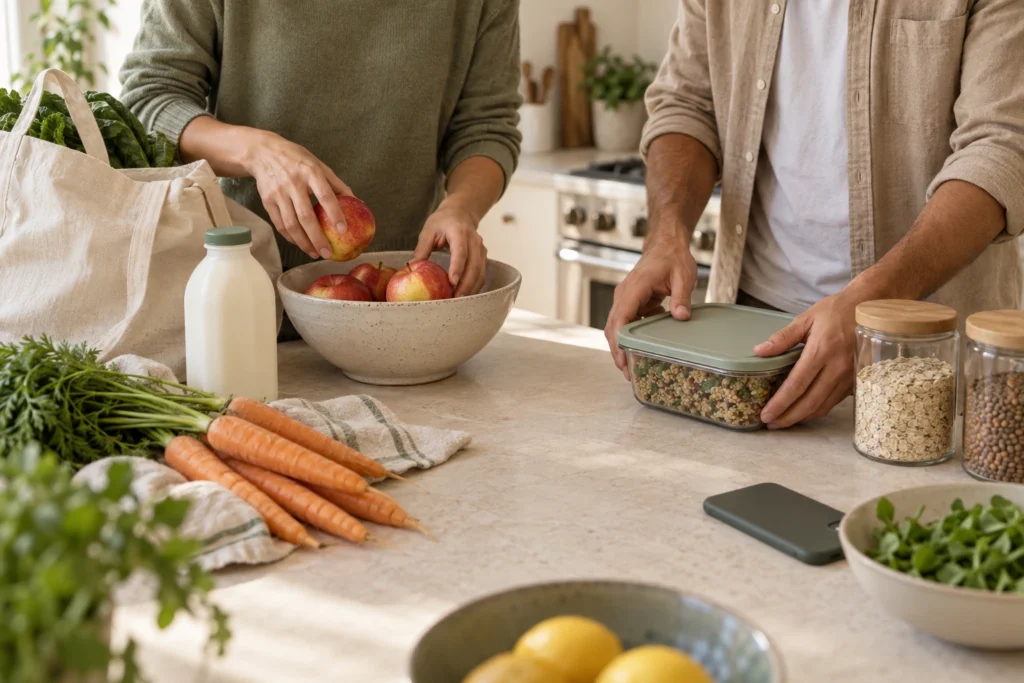
Sharing works best when everyone is looking at the same pantry. If one person has already recorded the food and labelled the containers, their account is often the practical home for it. With Pro, the owner can invite up to four others, and each person uses their own account.
The choice matters because joining a household doesn’t merge personal pantries. The shared kitchen becomes active while the member’s personal items are hidden. Their personal pantry returns if they leave; anything they contribute to the shared pantry stays with the household. Two people recording the same kitchen separately won’t have those records combined by an invitation.
The owner needs active Pro when inviting people and when they accept. The household FAQ covers the invitation details; the more useful conversation beforehand is deciding whose recorded kitchen everyone will share.
Once people have joined, a familiar labelled container is a useful way to see what sharing means. Everyone is opening the same record, and everyone’s edits affect it. The information no longer belongs only to the person who put the food away.
The detail another person can’t guess
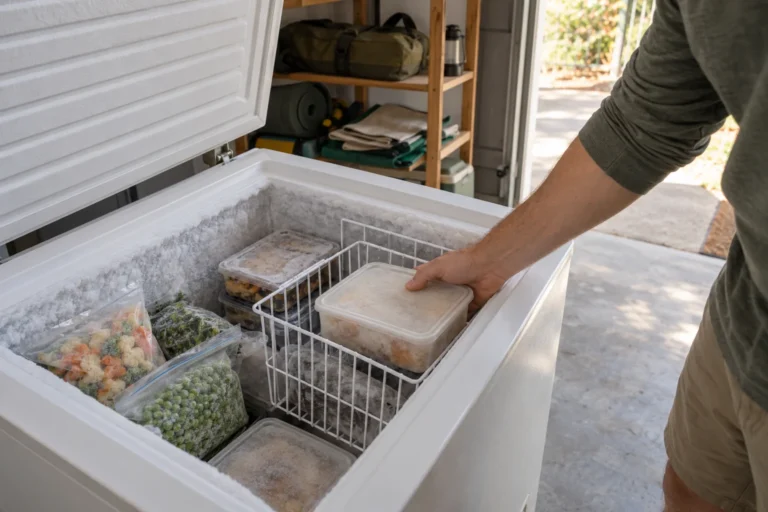
A container called ‘Dinner’ makes sense to whoever packed it. ‘Pumpkin and lentil soup, two serves’ tells someone else whether it will feed them. A recognisable location, such as Garage freezer, saves a search in the kitchen freezer first.
Plans need the same clarity. ‘For Thursday’s curry’ explains why an ingredient is there. ‘One lunch portion’ helps someone avoid assuming a container will cover dinner for two. Those notes are agreements between people, rather than locks on the food, and they need to change when the plan does.
The household recipe book and meal planner can carry the wider decision. If tonight’s four-serve cook feeds two people, the other two serves might be lunches or another dinner. Agreeing which makes the extra cooking useful to everyone. The actual portions still need safe packing, storage and recording; a calendar entry doesn’t do those jobs. The NSW leftovers guidance covers handling the food.
Useful package information matters too. Notes can preserve cooking directions, but current ingredient labels still need checking for allergies. The NSW Food Authority explains why ingredients can change between purchases.
What happens between the fridge and the supermarket
Back to the yoghurt. If the unopened pack is recorded and still there, whoever checks before shopping has a reason to leave another one on the shelf. If more is needed, ‘Plain yoghurt, 1 kg, for the marinade’ makes the purchase clearer than ‘Yoghurt’.
A shared list helps, but two people shopping at once still benefit from a quick agreement about who is collecting what. The list contains the household’s needs; it can’t replace every conversation about changing plans.
The information also needs to make it home. After cold food is put away promptly, Finish shopping reviews what becomes new food and what refills an existing item. Its final checkboxes control the Food changes, while all reviewed trolley lines leave the list. An unbought item needs unticking on the shopping list before the finish is confirmed. Our shopping article explains that distinction.
As the groceries are recorded, the quantities, locations and packet dates need to match what arrived. New yoghurt and an older opened pack should remain distinguishable. The next cook can then understand the shop without asking whoever unpacked it.
Small updates shared between people
The person who finishes the yoghurt knows it’s gone. The person who moves soup to the freezer knows where it went. Recording the change during those ordinary jobs spreads the remembering across the household.
Changes to the household itself need a little attention too. The owner can remove a member, or a member can leave. Their personal pantry returns and their contributions stay in the shared kitchen. Any food they take with them needs a separate update; changing access doesn’t tell the app what left the fridge.
For the people still sharing dinner, the benefit is simple. The next time either of them passes the supermarket, they can see the same kitchen. There may still be a conversation about what to eat, but buying yoghurt no longer has to begin with a guess.