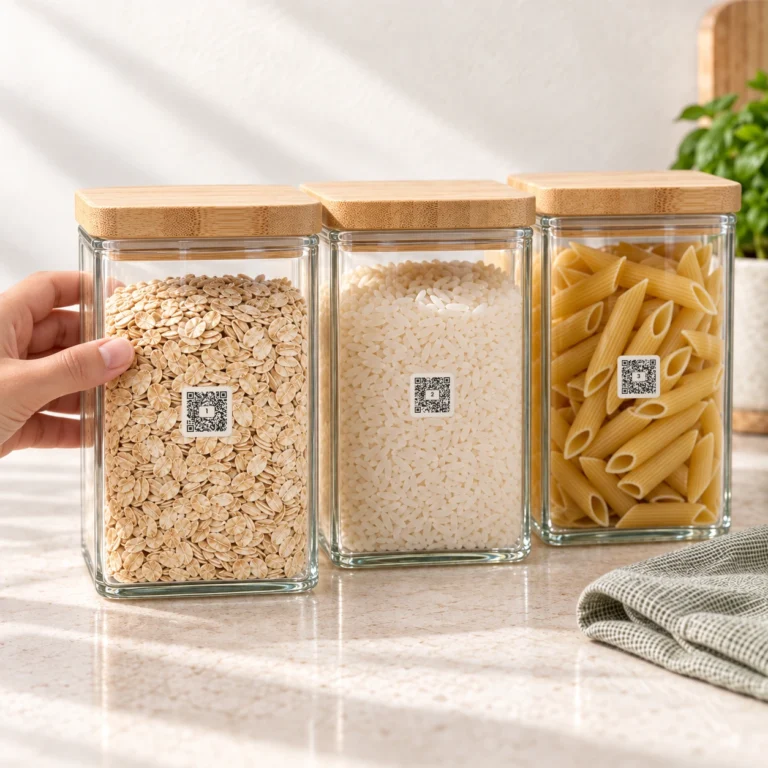
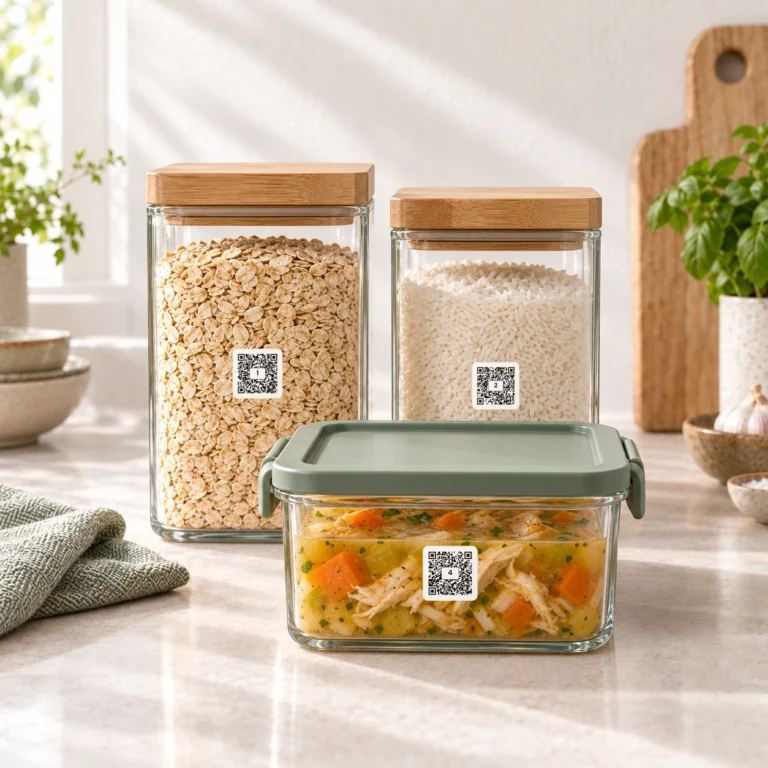
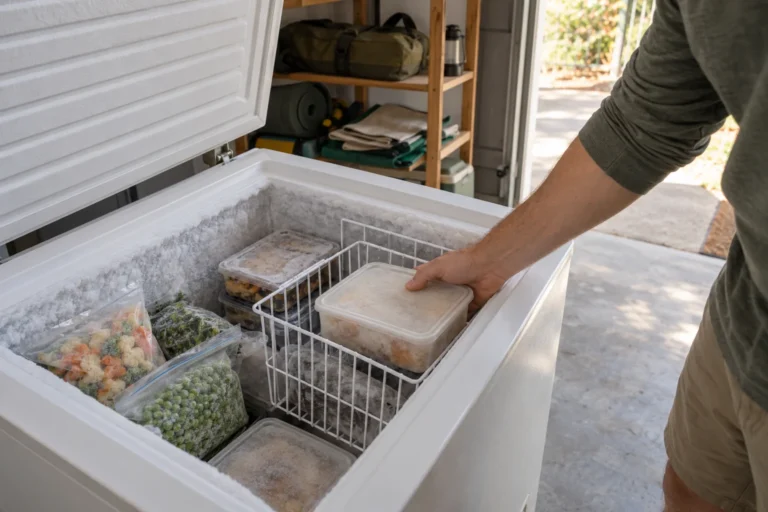
The rice fits neatly in its jar, the empty packet goes in the bin and the shelf looks better already. A week later, you’re making dinner and trying to remember the water ratio printed on the back.
It’s a small drawback to an otherwise useful habit. Jars can make everyday ingredients easier to reach, pour and put away. The packaging they replace was doing another job, though: holding the details that weren’t obvious from looking at the food.
Those details can stay with the jar. A QR Pantry label opens its saved food record, where the instructions and date can change whenever the contents do.
The useful part of the packet
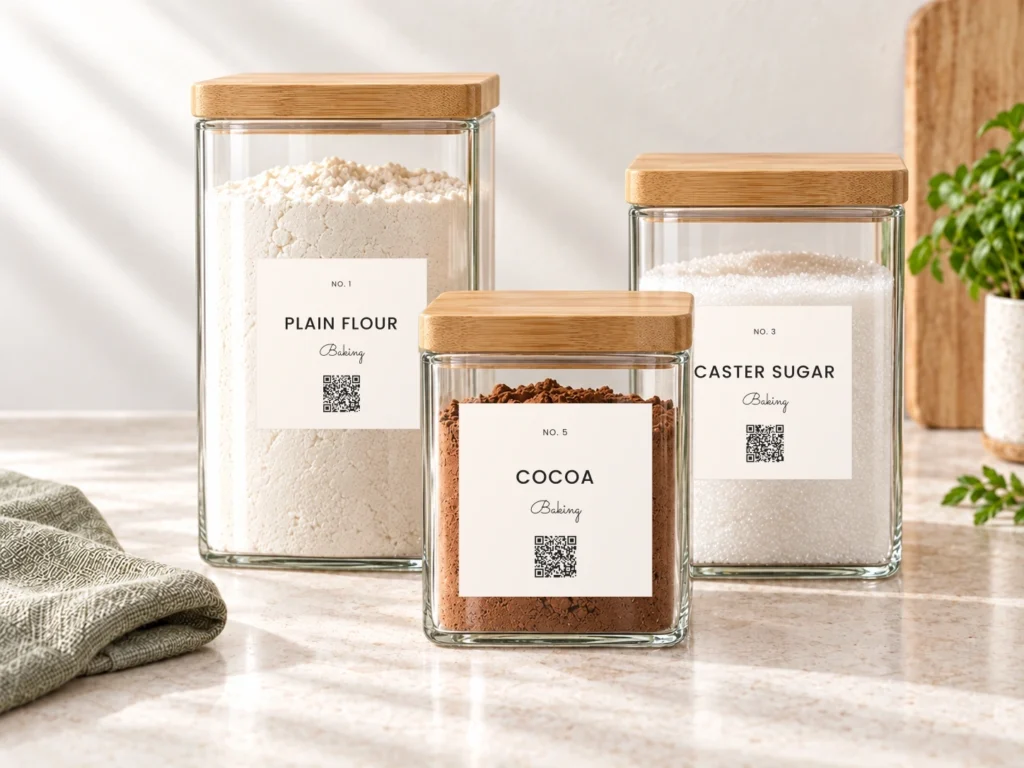
The food’s exact name is a good place to begin. Basmati and arborio are both rice, but knowing which one you have changes dinner. The same is true of plain and self-raising flour. A visible name on the jar helps people reach for the right ingredient without a phone.
The saved details can do the rest. Notes are useful for the packet’s actual water ratio, cooking time or preparation steps, as well as its storage and after-opening directions. Free includes a photo for each food item, and a readable picture of the packet may prove more useful than a portrait of the jar.
The printed date belongs there too, with Use by or Best before selected to match the packet. FSANZ explains that these concern safety and quality respectively. Decanting doesn’t renew either date, and storage directions continue to apply. Food shouldn’t be eaten after its use-by date.
Ingredient and allergen information deserves particular care. The NSW Food Authority advises checking labels every time you buy, because ingredients can change. Keeping original packaging available where it’s needed gives you a reliable reference. An old photo or an app’s allergen fields can’t establish that the next packet is suitable for someone with an allergy.
A jar that earns its place on the shelf
The best candidates for decanting are often staples you use regularly. A suitable food-safe jar, cleaned and dried before filling, should make scooping or pouring comfortable and meet the food’s storage needs. Some ingredients remain more convenient in their original packaging, particularly when the full label needs to be close at hand.
For the first fill on Free, the order is simple: scan a fresh QR Pantry label, then add the food to it. This creates the connection while the packet is still beside you. Pro can also pair a label with an existing food record, useful if the purchase has already been entered or imported. That avoids recording the same rice twice.
Later, a scan brings back the information you saved. When the saucepan is on the stove, the cooking instructions are there. A rough idea of what’s left helps with planning too, although a recipe needing a precise quantity is still a reason to look inside the jar.
The next packet of rice
The point where this habit can unravel is the next shop. There’s a little rice left in the jar, a new bag has arrived, and pouring one into the other would clear some space.
But replacing the jar’s date with the new packet’s date would lose the older rice’s history. Keeping the replacement in its own packaging and record makes it clear which batch is which. If both need to be open, separate containers can preserve that distinction.
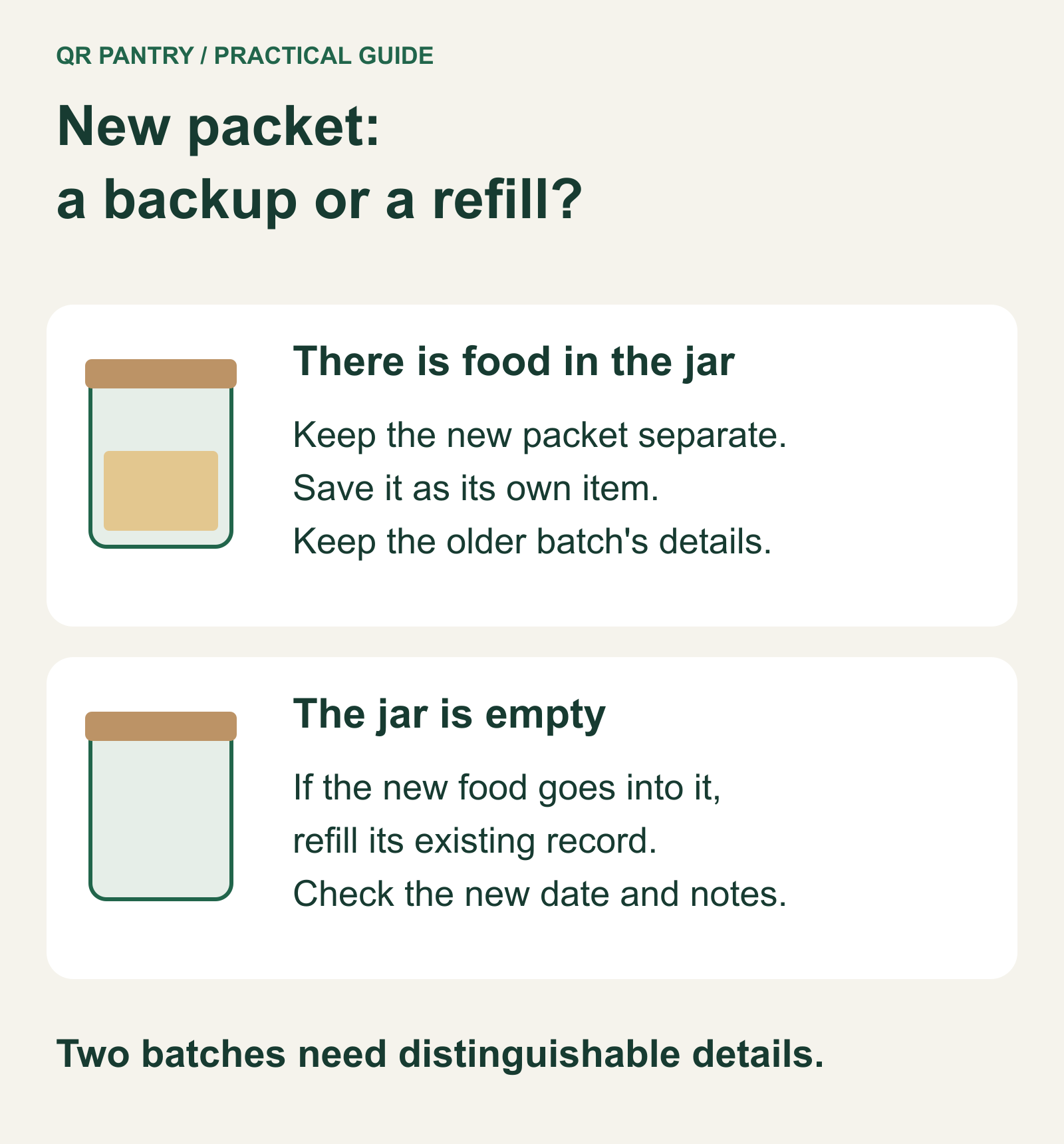
This also makes the shopping picture more accurate. A half-full jar plus an unopened bag is different from a jar that needs replenishing. If the batches have already been mixed, the earlier relevant details still matter; the newest date shouldn’t replace them.
The label stays, the details change
When the jar is empty, it can be marked Used up while keeping its reusable label ready for a refill. Cleaning and drying the container prepares it for the next batch. The new fill then needs its own amount, date and packet details.
A different brand may have different cooking instructions or ingredients, even when the food’s name stays the same. That brief look at the new packet keeps the saved record useful. Pro’s back-of-pack reading can help capture information, but any extracted text still needs checking against the original.
The shelf can look just as tidy as before. Next time you make rice, though, the useful part of the packet will still be there when you need it.