You remember the curry. It was the one with chickpeas, everyone liked it, and you saved the recipe somewhere. Finding it now means scrolling past screenshots of other dinners while this one gets later.
Many kitchens already have a good recipe collection. It is just scattered between browser tabs, cookbooks, messages and photographs. Bringing a few favourites together can change the start of an evening: the dish comes to mind, and the recipe is where you expect it to be.
That is the useful promise of a recipe book in QR Pantry. Alongside keeping the recipe, it can help you see how it fits the food you’ve recorded at home.
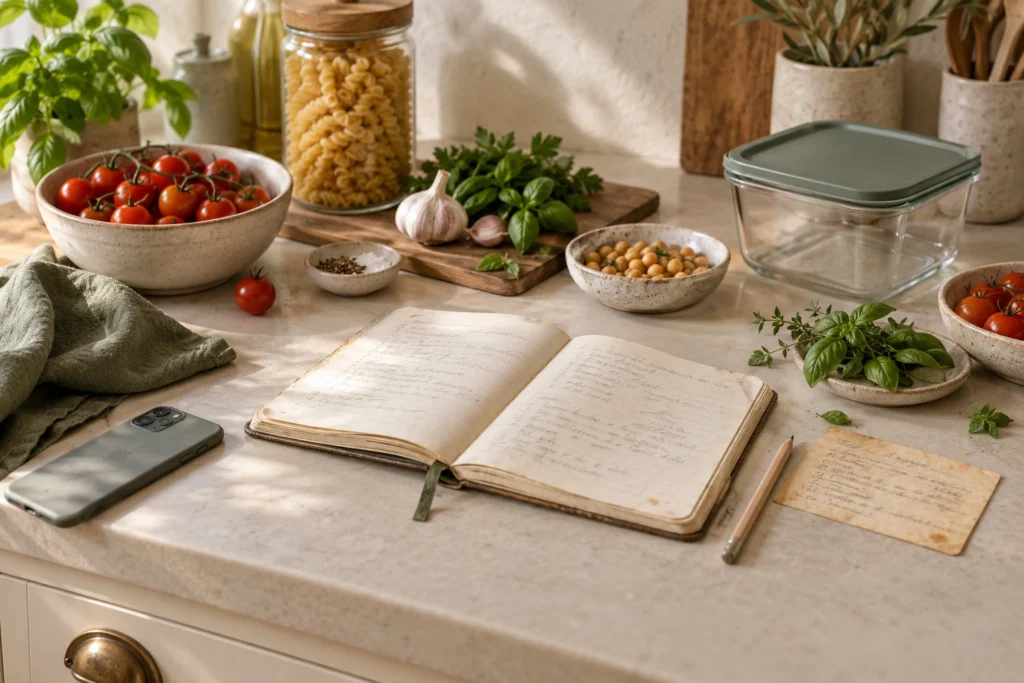
The meals that deserve a place
The curry earns its place because you want to cook it again. A quick pasta might belong beside it because it works after a late finish. A soup could be there for the evenings when making extra is worth the effort.
Thinking about a collection this way gives each recipe a reason to be there. A beautiful weekend project can sit happily alongside an ordinary dinner, but it helps to know which is which when you’re hungry on a Tuesday. Categories such as Weeknight or Batch cooking reflect those differences, and a recipe can belong to more than one.
Free has room for ten recipes. That is enough for a useful repertoire without having to sort every link you’ve ever saved. Favourites and ratings help the meals you’ve enjoyed stand out as the collection grows.
A saved recipe needs to be complete
Recipes arrive in different forms, so QR Pantry’s Add a recipe accepts a link, a photo, pasted text or your own writing. A clear photograph can bring in a family recipe card; the actual recipe page is a better source than a search result or a whole social profile. If a link can’t be read, the complete written recipe can be pasted instead.
The important part is what arrives. Photo and text imports use AI, and link imports may use it too. The resulting draft needs comparing with the original before you rely on it. For the curry, that means the serves, chickpea quantity and method should all agree, including details such as draining the tin.
Reading the draft in cooking order catches things a quick glance can miss: a temperature left out, a preparation step separated from its ingredient, or the last line cropped from a photograph. Keeping the source with the recipe gives you somewhere to return when a detail needs checking.
Measures deserve attention too. The original measurement system should be preserved, and changing the number of serves only scales the ingredient quantities. It doesn’t work out a different pan size or cooking time. Those decisions still need the author’s guidance and your judgement.
When the curry meets the cupboard
A week later, the curry might come to mind because you have chickpeas and rice. QR Pantry’s Can cook now and Uses expiring food filters can help narrow your saved recipes in much the same way, using recorded ingredients to suggest a useful place to look.
There is still a small but important gap between a recorded ingredient and dinner. The rice jar may be nearly empty. One tin of chickpeas may be less than the recipe needs. Pantry matching checks whether food is present, and some staples may be assumed available; it doesn’t inspect the cupboard or establish that the quantities are sufficient.
A look at the actual food settles those questions. The shopping list can then cover the shortfall, instead of becoming a fresh list of everything in the recipe.
Dietary needs require their own check. A category name or ingredient match doesn’t establish allergy suitability. The full recipe and current packaging matter, including any substitution. The NSW Food Authority advises checking labels on every purchase, because ingredients can change.
A collection shaped by what you cook
After dinner, you know more about the recipe than you did when you saved it. Perhaps it is one you’d happily make again, or there is a change you want to remember. A rating and an accurate saved version make that experience useful next time.
The food records need to reflect the cook too. A spoonful of curry paste leaves a partly full jar; it should only be marked Used up when it is empty. Extra portions are actual food to store safely and record, even if you have already put a leftover dinner on the calendar. Our batch-cooking guide explains that handoff.
The next time someone asks for the chickpea curry, the search is over quickly. You have the recipe you cooked, the details you checked and a clearer idea of what is already in the kitchen. The collection has become part of dinner.