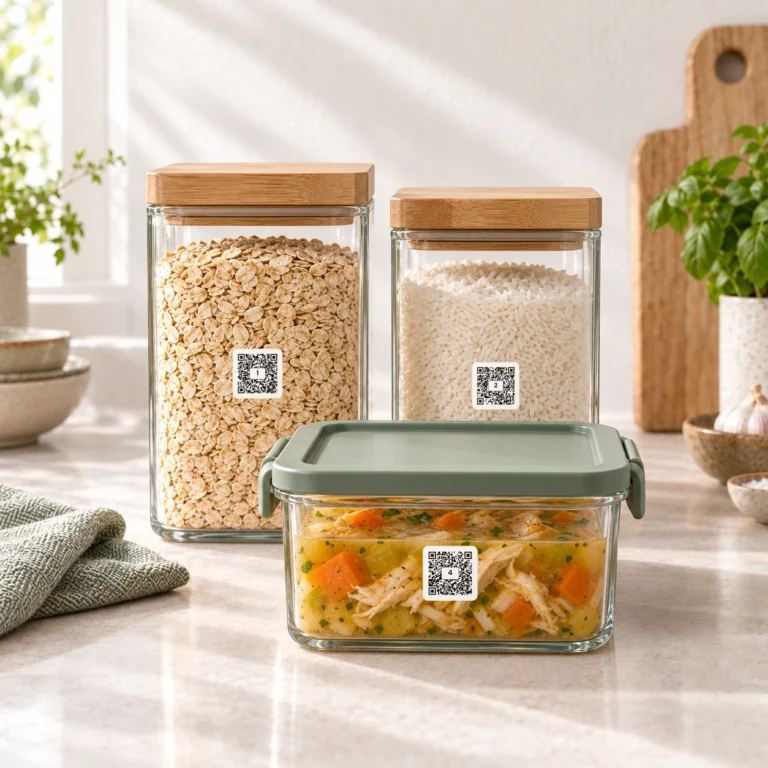
Wednesday is the night everyone gets home late. A meal plan that calls for an hour of cooking can look perfectly reasonable on Sunday and feel impossible by the time Wednesday arrives.
This is where a useful plan earns its place. It makes a few decisions while you have time to think, so dinner is manageable when you don’t. The food already in the kitchen and the shape of your week matter as much as which recipes sound appealing.
QR Pantry brings those pieces together. The plan can include a favourite recipe, a meal you’ve already prepared or a note for an evening out. There is no need for every square on the calendar to represent another cooking session.
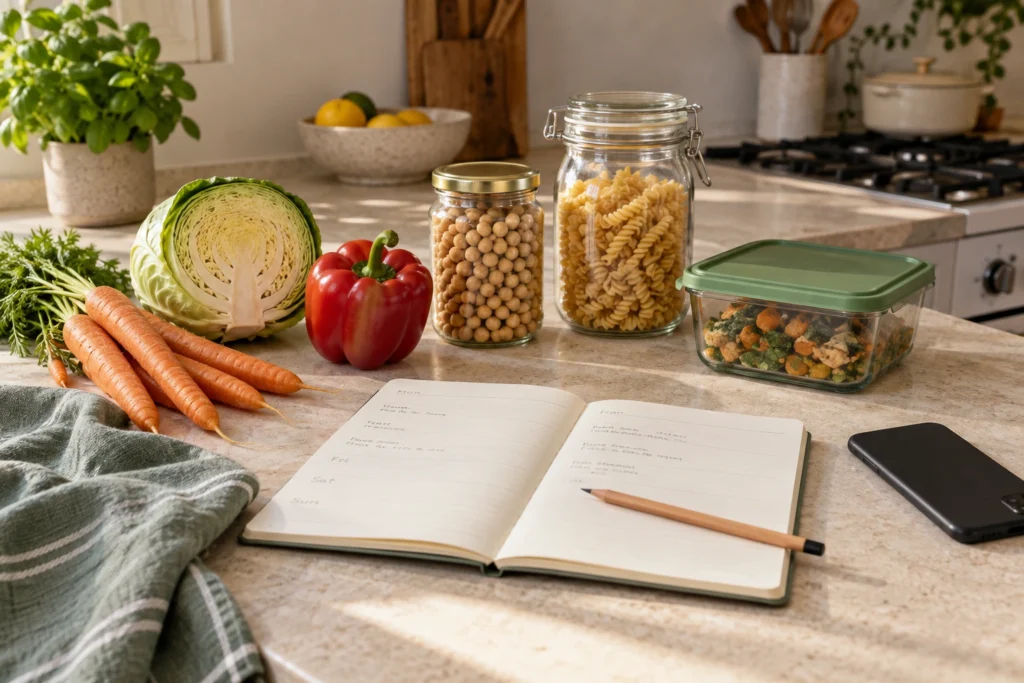
The week you are actually having
A late finish, dinner with friends and an evening when only one person is home all change how much cooking is needed. Knowing those things first gives the food a realistic chance of being used.
Three dinners can be enough to plan at a time. Monday might allow a familiar pasta, Tuesday a larger cook, and Wednesday something ready to finish and serve. The point is to make those evenings easier, rather than fill the calendar for its own sake.
The fridge helps narrow the choices. Mushrooms that are suitable to use could go into Monday’s pasta; half a pumpkin might make Tuesday’s soup. A check of Food is useful here, followed by a look at the actual ingredients, especially opened packets or amounts that may have changed.
Dates are part of that decision. FSANZ distinguishes use-by dates, which concern safety, from best-before dates, which concern quality. Food shouldn’t be eaten after its use-by date, and storage and opening directions still apply. Choosing a recipe doesn’t change those limits.
Tuesday’s cooking can become Wednesday’s dinner
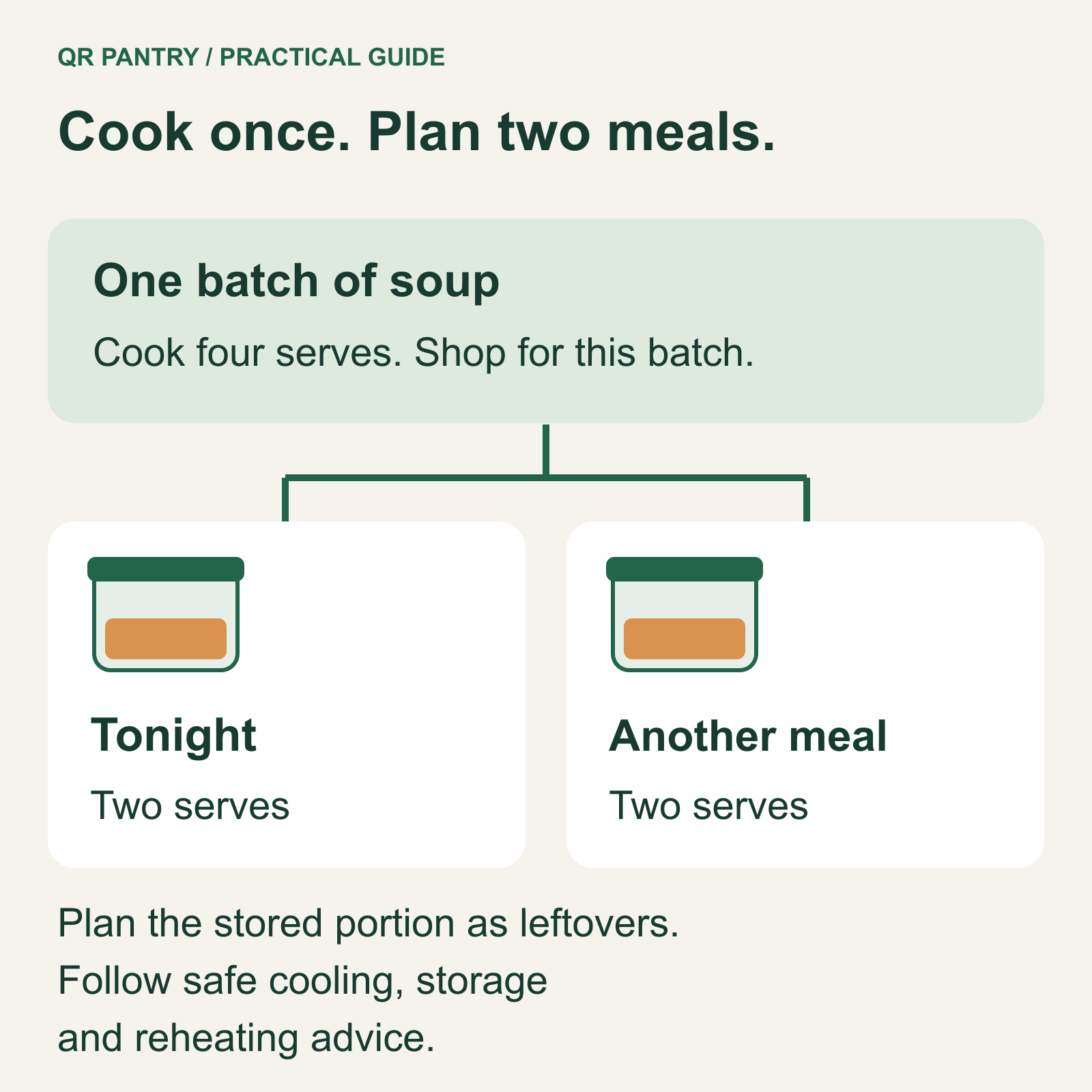
For a household of two, a four-serve soup gives Tuesday a useful second job. Two serves are for that evening and two are for Wednesday. It is one batch of cooking that covers two meals.
In QR Pantry, setting the planned recipe’s Serves to four makes the ingredient quantities reflect the whole cook. Add leftovers the next day gives Wednesday its own place on the calendar. Adding the full recipe again would suggest another cooking session and could ask you to buy its ingredients twice.
That distinction is easy to miss on a neat weekly plan. A leftover entry is a promise about food you intend to save. It becomes a real option only when the portions are safely packed, stored and recorded after cooking. The NSW Food Authority's leftovers guidance covers cooling, storage and reheating; our batch-cooking article explains keeping track of the individual portions.
A meal already in the freezer can do the same job on another busy evening. Its useful questions are how much it feeds and what preparation it still needs. Soup may need bread. A frozen sauce may need pasta and time to thaw according to its directions. Neither needs its original ingredients bought all over again.
The shopping list gets smaller when the plan gets specific
Once those dinners have a place, the shopping decision becomes more concrete. There is a quantity of soup to make and bread to serve with Wednesday’s portion. The cupboard may already cover much of it.
QR Pantry’s pantry matches help identify recorded ingredients, and Pro’s Shop the week can bring the week’s needs together. Free includes planning for the current week, with missing ingredients available from each recipe’s pantry panel.
The remaining judgement is about amounts. A yoghurt record doesn’t prove there is enough for both a sauce and a marinade, and finding an onion doesn’t mean you have all the onions the week requires. These checks work from ingredient presence, with some staples assumed available. The actual packets and jars supply the answer about how much is left.
The same practical review applies if Pro’s Plan my week offers a draft. A suggested dinner still has to suit that evening, the people eating and the food available. A useful plan should feel recognisable as your week.
When Tuesday changes
Someone works late or brings dinner home, and the soup moves. That affects more than the calendar: the pumpkin still needs using, and Wednesday has lost its prepared meal.
Seeing the connection gives you a chance to act. The ingredient might fit another suitable dinner, or freezing may be appropriate while it is still safe. Moving an entry to Friday doesn’t extend the food’s storage life. Updated food records and a quick look in the fridge help the revised plan stay realistic.
When Wednesday comes, dinner might be the soup, a freezer portion or another straightforward meal. What matters is that the decision was made with that evening in mind. You can get home late and still know what you’re eating.